February 2014
For the past several weeks the children in our Pre-K
program have expressed an interest in their families, friends and bodies. We
began the discussion by asking; how are we all alike? How are we different?
They had many responses such as;
* Some of us have long hair, short hair, curly hair,
straight hair
We began by outlining each child’s body on a large
piece of white paper, then they filled in eyes, nose, mouth, hair, clothes etc…
next they laid on the carpet and we (teachers and children) used colorful tape
to outline their bodies again, last they lay on the floor and we measured them
again using a tape measure, and rulers and wrote out the number of inches tall
they were.
The children compared each of their body’s to see
how different they were; shorter, wider, etc…
For math, the children worked on a graph coloring in
the numbers of inches tall they were
The second week we discussed the many members in a
family, each child told about his/her family. They talked about their parents,
siblings, other family members and how they are all a part of a family, big or
small. They drew pictures of their families, their houses, and also painted
many pictures of themselves.
Friendship
was discussed the 3rd week as Valentine’s Day approached. The children drew
pictures for their friends and families, cut out hearts of many different
sizes, decorated them and wrote notes on them. On Friday for Valentine ’s Day,
they made their own ice cream sundaes using many different kinds of toppings,
which they enjoyed!
On the 4th week we discussed lists with the children
and helped them create lists of the things our bodies need to grow, such as;
Emmasofia- “eat meat, drink stuff that are liquid
to keep hydrated”
Ava- “Food; yogurt, exercise, sleep, go to doctor”
Lily- “eat lots of fruit, vegetables and water”.Noah- “eat food, veggies, salad and carrots”
Rihanna- “water”
Misael- “water, eat food, coffee makes you grow
big”Max- “carrots”
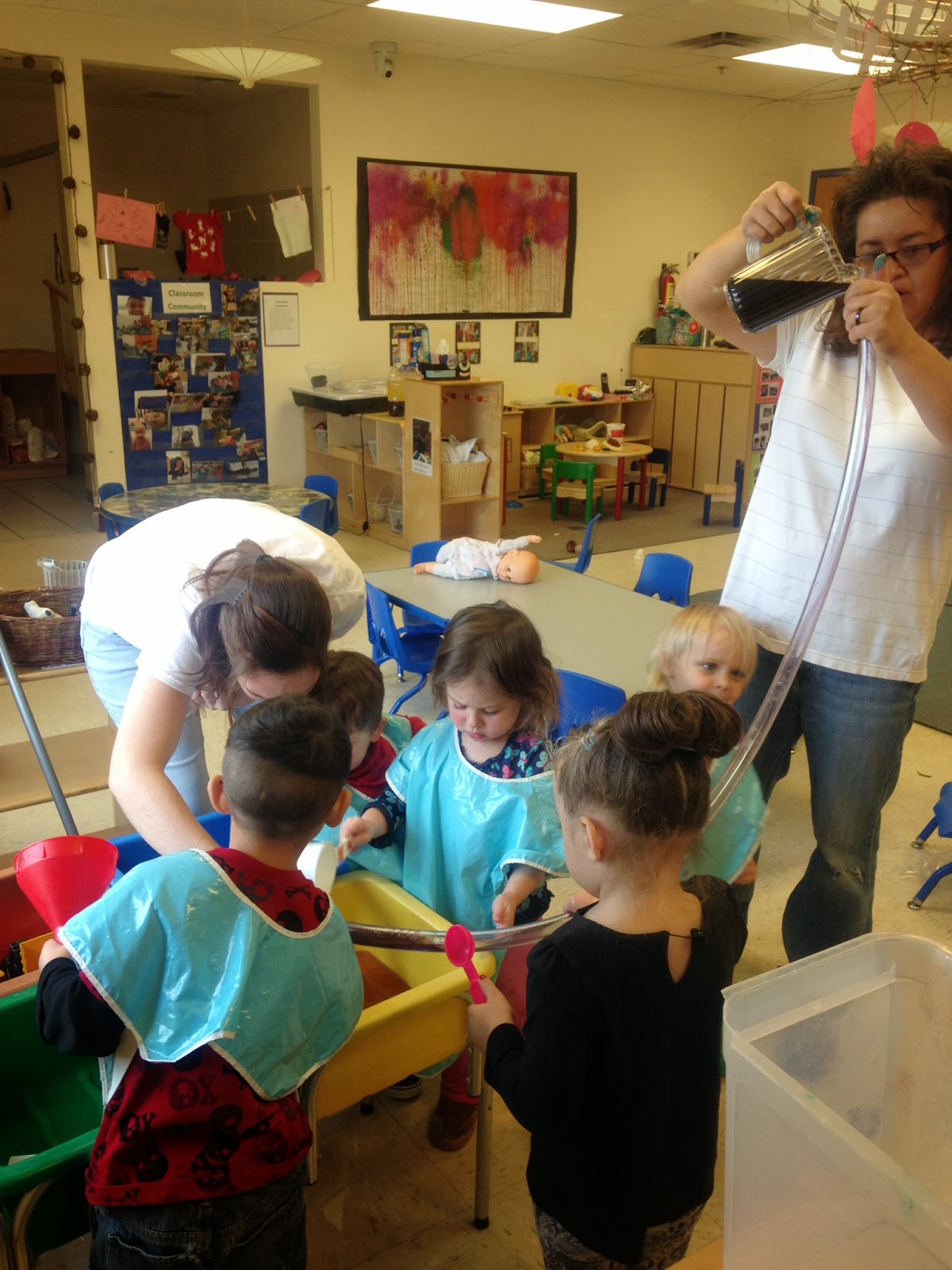
The teachers brought in foods for tasting, fruits, nuts, grains and hummus. As the children tasted the foods, they said;
Alex- “I like the limes and lemons, I eat them at home”
D’Andre- “I don’t like this stuff, only the cracker”
Kosmo- “The almonds are salty and crunchy and the
cracker too, the orange is sweet, the lemon and limes are sour.”
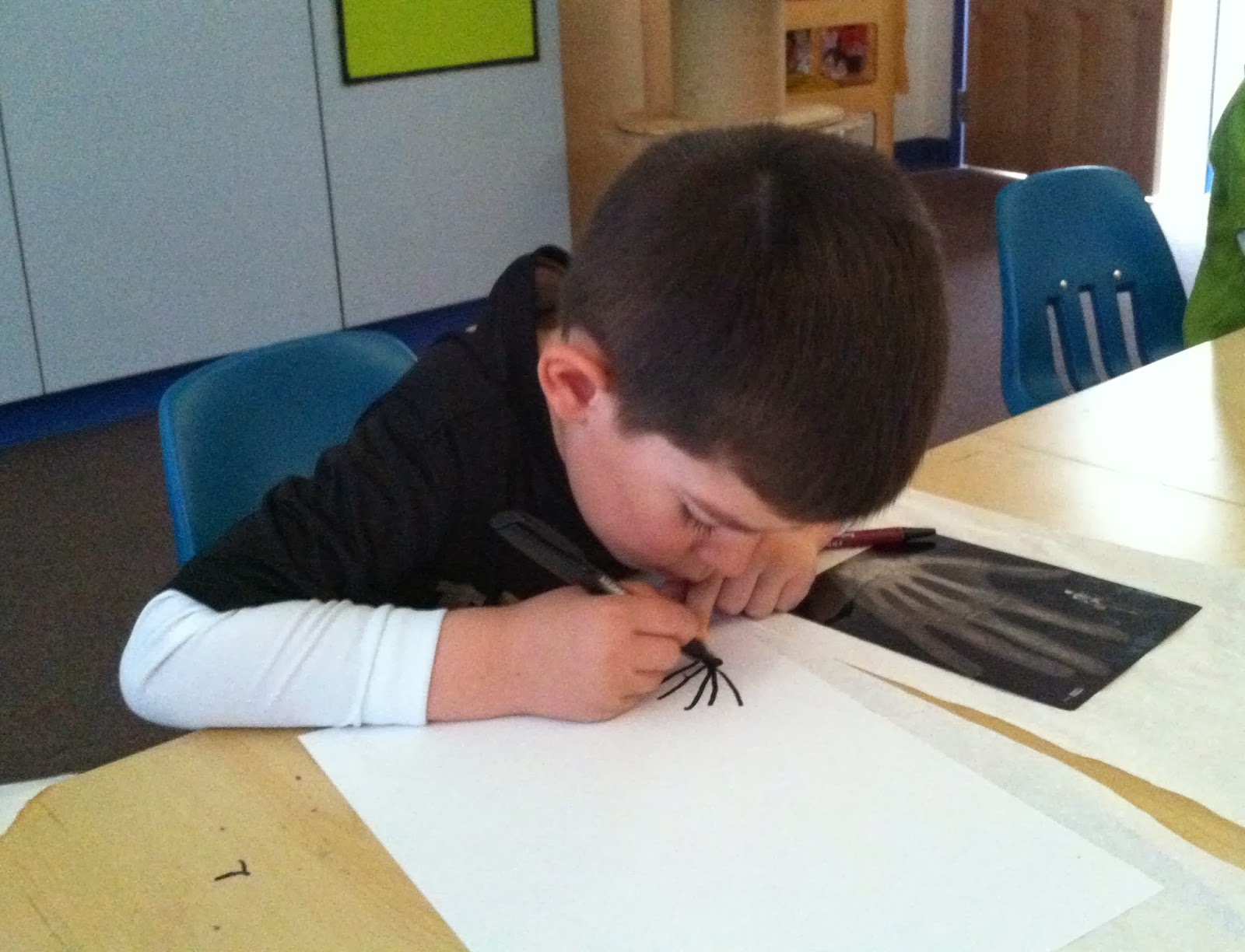
They cut out pictures of foods from magazines to create a collage of good things to eat. During outdoor play, they had races around the playground, and went for walks on the trail. We also read books on our bodies, looked at skeletons made of foam and plastic, they also traced their hands on black paper using chalk, then used glue and q-tips to outline body parts.
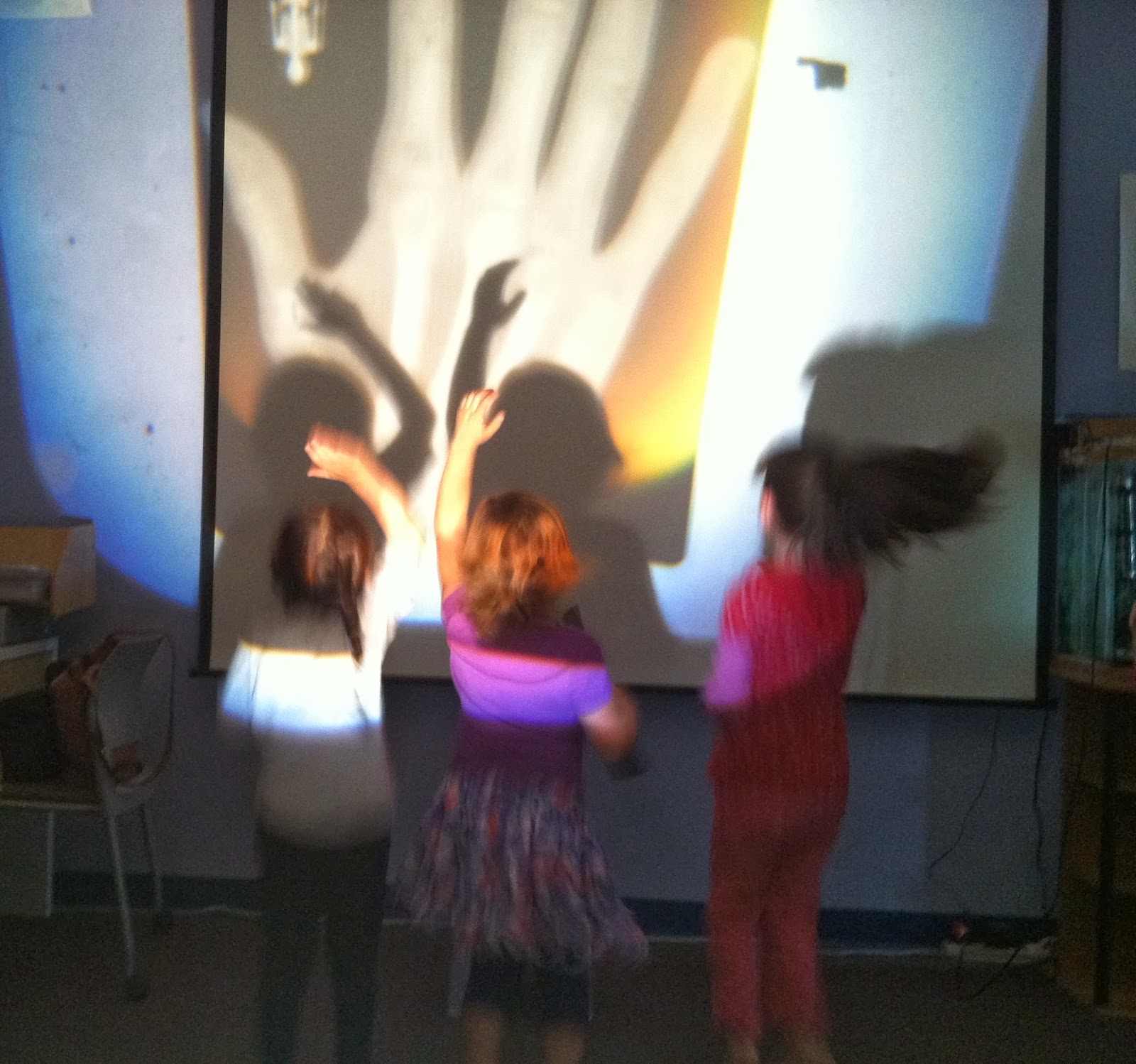
In small groups children examined x-rays using a projector looking at individual bones. Some of the things they observed were: Alexa- "the skeleton is the whole body"
Ava- "bones are white and hard all the bones make up your skeleton"
Tessie- "looked there are bones in your toes"
Alex- "wow I did not know that the brain looked like that"
Carly- "each one of your fingers has a bone"Dakota- "the hole there in the bone is because your knee moves" ( as she points to the knee x-ray)
Aliya- "this is the bone to the head it's what makes your head hard"
Noah- "10 bones are in all of your fingers"
Max- "your chest has 20 bones wow that's a lot of bones"
Moses- "These are teeth and eyes, eyes are circles" ( as he points to the x-ray of the skull)