Monday, April 14, 2014

Under Kidstruction

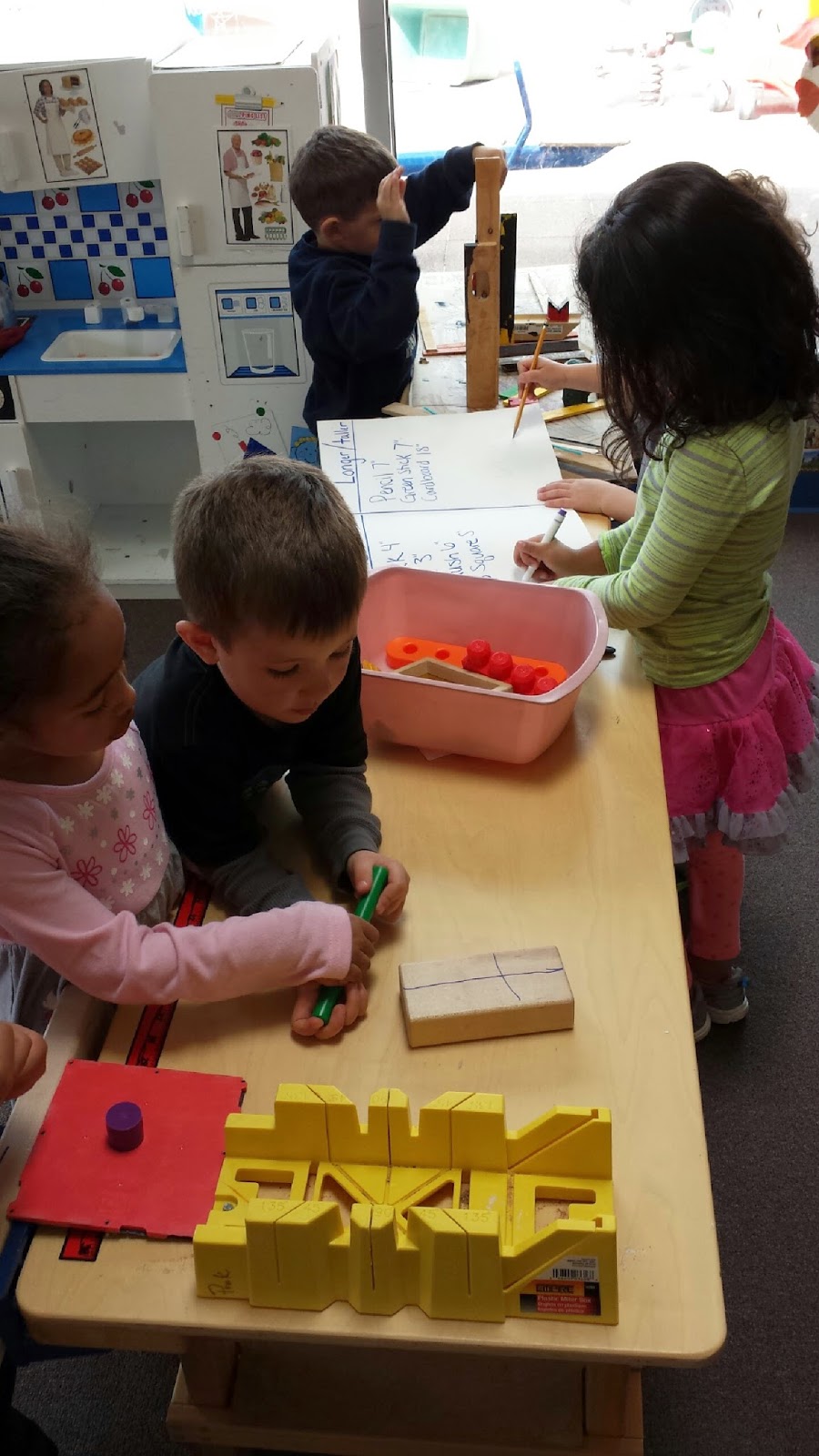
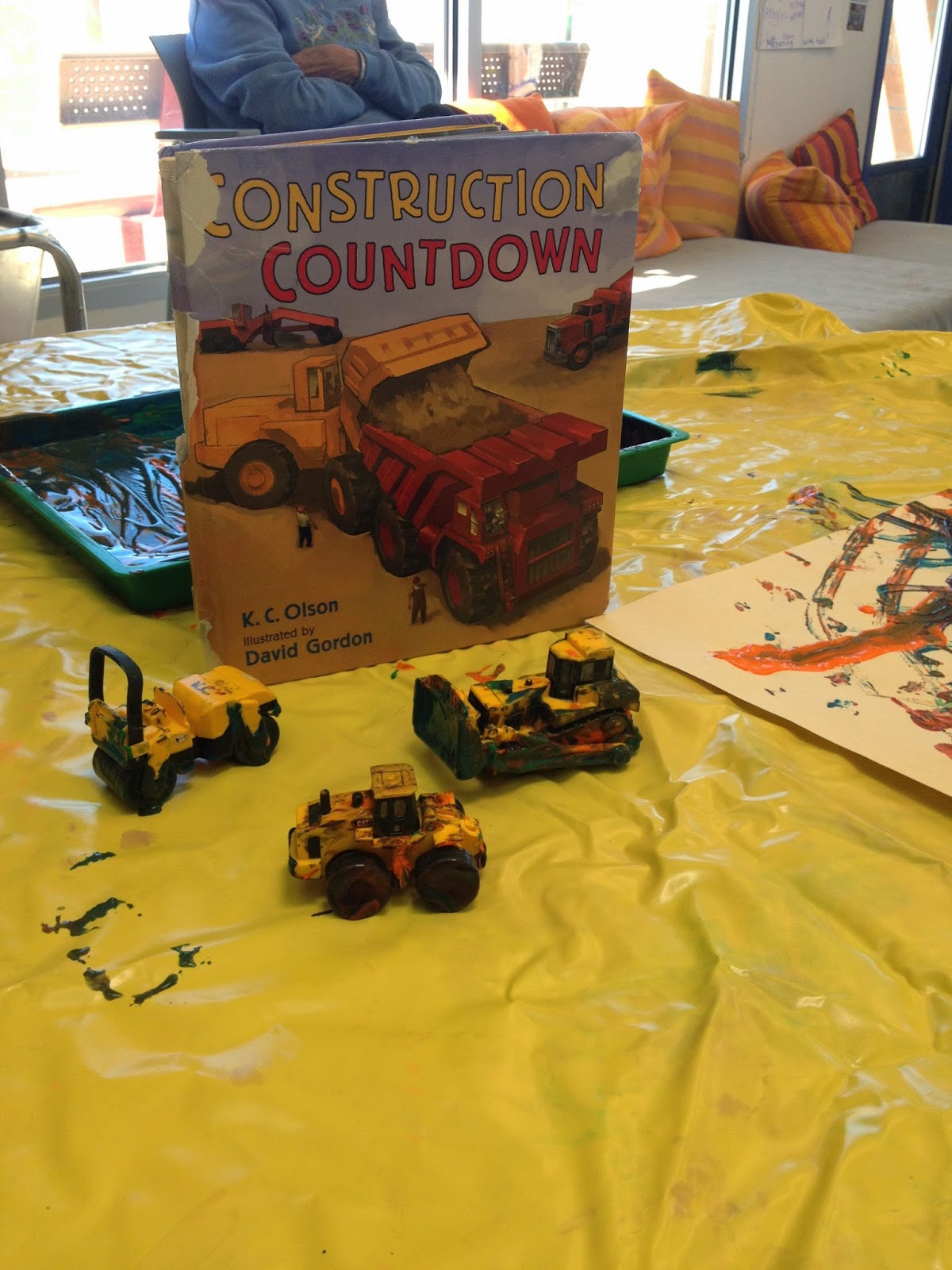
The children have been busy at work focusing on builders! We started by changing our classroom into a construction zone. We provided several books in the library area for children to see. For circle time we sang songs such as “Build a House, “We are builders”, and “London bridges”. The children developed different vocabulary, to express their thoughts and ideas about construction and building. Throughout this study children have engaged in math and movement activities. They also explored various pieces of literature focusing on the workers, the machines, and the tools that build structures. Projects we did included a recycled city, reading the classic story “Three Little Pigs” and taking turns acting out and role playing the story, hammering stumps in dramatic play area, nuts and bolts sorting and sink and float using construction items. We provided different types of measuring tools such as tape measure and rulers to encourage them to measure. We added pictures of buildings and towers and paper and pencils for them to create their own floor plan. Finally we used a variety of materials to build with, paper cups, spaghetti and marshmallows, egg cartons, different blocks. We painted with tools and tractors. We had so much fun we will create a book that shows pictures of us building for our library for everyone to enjoy!


What types of tools do builders use?
Paloma: hammer
Thalia: nails
Daisy: saw
Meadow: my dad is a builder, he builds houses in Taos
Jesus: measuring tape


What types of machines do builders use?
Jayden: crane
Vincent: dump trucks
What types of things do they build?
Addison: skyscrapers
Paloma: schools and fix schools
Kamila: Hotels
Lukus: houses


What do builders wear?
Jonathan:  they wear hardhats and goggles, they wear vests so that the cars can see them, and they wear hats so that things won't hit them on the head
Isaiah: he wears a helmet to protect his brain
James: They wear vests so they can zip them up

New Mexico Early Guidelines children worked on during this study:
#1: the child independently uses gross motor control including balance, spatial awareness and stability
#2: the child independently uses fine motor skills
#4: the child demonstrate safe behaviors and increasing number of situations
#5: child demonstrates development and expansion of listening skills
#6: the child communicates experiences, ideas and feelings through speaking
#7: the child engages in activities that promote emergent writing skills
#10: the child demonstrates understanding geometrical and spatial concepts
#11: the child demonstrates an understanding of nonstandard units to measure and make comparisons #12: the child demonstrates the ability to investigate organize and create representation
#20: the child works cooperatively with other children and adults
#22: the child demonstrates knowledge of neighborhood and community
#23: the child is opening curious to learn new things
#27: the child displays persistence and pursues challenges
#28: the child uses problem-solving skills






Wednesday, March 26, 2014

Art! Art! Art!


Art is an essential building block of development for toddlers and helps them bridge learning with many other subject areas. For the past few weeks toddlers have been creating and looking at art, which benefits them in many ways. We have been incorporating many different art materials into the toddler room. 

One of the activities done was painting clear plastic water bottles with marbles and paper.  Toddlers shook, rolled and spun the bottles, the end product looked very much like stained glass and each paper was very different.  Toddlers worked hard putting marbles into their bottles while looking inside to see what was happening on the paper.

Painting with golf balls was another fun activity. Toddlers worked together as a team to move the large tubes rolling the golf balls in all directions. They laughed as the balls jumped around in the tub and onto the table and floor.

Toddlers also experienced the properties of heat by using a hot plate to melt crayons.   At first children were hesitant to participate because of the heat but as soon as realized that they would not get hurt they became very interested. They moved the crayon in a circular motion as they watched the crayon melt onto the paper.

Toddler also created clear collages using contact paper with many different materials.  One day children went walking on the path to collect natural materials for the collage back in the classroom they worked together to arrange the materials onto the contact paper. They also created a collage using small pieces of paper. They were using their fine motor skills to pick up the small pieces of paper.   The last collage toddlers did was a mix of materials using papers, fathers, confetti, and plastic lace. When toddlers first worked with the contact paper they were very interested in the feeling of the sticky contact paper, they put their hand on it and laughed as they tried to pull their hand off.  Not only were these activities exposing them to many different art mediums but also helped children understand cause and affect.
Over all these art activities have been an excellent opportunity for children to be creative, nurture friendships and take part in unique experiences.


Tuesday, March 25, 2014

Beginning to Build Concepts: Problem Solving


Teachers help children hold their bottle, first. As we are helping children hold their own bottle we are also holding their hands at midline to encourage them to hold their own bottle.
Learning to hold her own bottle

Usually, we stick these magnets together or onto the door. Today, one child place the magnet on the seat of the chair and the magnet fell to the floor. Then she placed the magnet on the side of the chair, the magnet stuck! She placed another and another, then she place one onto the other. It stuck!
Problem solving by finding different places for the magnets
Magnet Play

After seeing children building on their problem solving skills, we added a string of different materials to the classroom. Using this string children would be able to spin the toys, and to move the toys back and forth; one by one or all together. At first, children were shaking the rope to make noise. When we welcomed a new child into our classroom, she moved each toy on the string individually from one end of the string to the other end. After seeing her do this, the other children began to do the same.
Building concepts and problem solving
Learning the the toys on the string can move from side to side
Spinning the toys

Sensory Study

February 2014

February 2014


February 2014

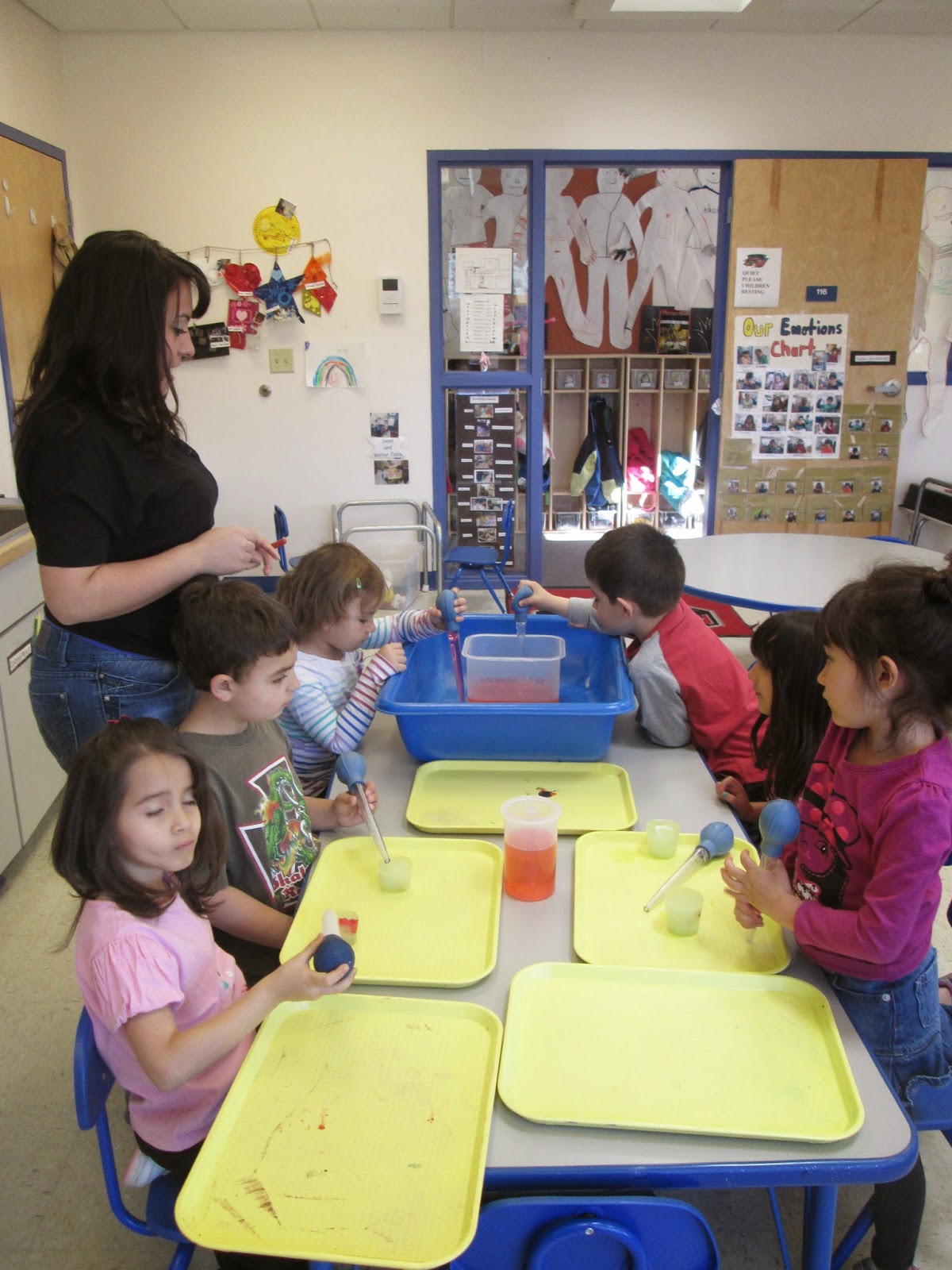
Our sensory exploration started with us making sensory tubes: oil and water; feathers; food coloring, water, and baby oil.  One of our youngest infants interacted most with the sensory tubes.  This led to more water and sponge play.  The first time, january, we introduced the water and sponged only one infant dared the water table. This time around, more children interacted with the sponges and the water table. Children interacted, communicated, splashed, and learned about water. Through water play children are learning about temperatures (warm and cold), capacity, gravity, water ways, filling and emptying.

February 2014


February 2014
 Next we moved on to finger painting... As we touched the paint with our fingers and toes, one child did not want to touch the paint with her hands. She looked at the paint and placed her hands on her chest as she shook her head side to side. As she shook her head side to side, we showed her a paintbrush. She reached for the paintbrush and began moving the paintbrush side to side in the paint. 

February 2014


February 2014
 
March 2014

In one of our areas in the classroom, we have a bucket with different sensory materials... cotton, soft material, rough material, etc. Children use these materials to touch them to each other's faces, in between their own toes, and on our hands. After seeing children explore these textures, we added feathers to our classroom. We added loose feathers and tied feathers to our mobile. With these feathers children touched, blew, and threw the feathers.
March 2014

March 2014

March 2014

Our last sensory exploration was sand play. We took the entire group of students to the art room where we explored sand. Children huddled around the sand table. Children touched and squeezed the sand. They lifted the sand up and let it fall back into the table. Some children smiled, while others were hard at work (very serious). One children reached both hands and arms into the sand; another gently touched the sand with her fingers; and another used one hand to life the sand and let it fall down onto his arm.
March 2014

March 2014

March 2014

Throughout this six week sensory exploration, we also explored relationships with each other, problem solving, fine motor skills, communication, we are developing our individual approach to learning and we are building concepts.

Friday, March 14, 2014

Rain, Ice and Heat


This week the Pre-K students have been looking at weather, (rain, ice,  and heat). We first asked students “what is ice and where does it come from”? Students had many ideas.  They knew that ice happens when it was cold outside and from the freezer. We then asked students how we could make ice.  Their ideas were to put water in the freezer and outside, so we did. The next day students compared the difference between ice that was frozen inside the freezer versus ice that was frozen outside.  They noticed that the ice from the freezer was much harder than the ice that was outside, they noticed that the ice from outside had kind of melted. We asked them why this happened; they said because the freezer is really really cold and it isn’t cold outside.

Later in the week we discussed with children “what is rain and where does it come from” and  “can it rain when it's cold outside”  they had many great ideas:

Rain is water when it is done raining and makes mud- Carly

 Storm clouds come in and then comes the rain- Natalie

Rain is water.  When it stops raining it makes a rainbow- Noah

 It thunders and it lightning’s- Dakota

Rain does not fall from the sun because the sun is made of fire, it falls from the clouds - Misael

Sometimes when it is kind of cold and kind of warm it hails- Tessie

If it is cold it freezes, like snow and when it is warm it rains- Kosmo 

After students had an understanding of where ice comes from and how ice can only happen when it's cold outside we decided to show them the polar opposite “how can we melt ice and how can we things melt” ? We set up two activities for students to understand out how things can melt. One with a hot plate and crayons; we had the children productions of what would happen when they put the crayons on the hot plate.  We also asked the children how they could melt the ice. They said we could hit it, we said” without hitting how can we melt ice”?  They had many great responses: 

Water is making the ice melt- Carly

 Water makes ice melt and heat melts crayons melt- Adam

 The heat is melting the crayons and when things get very cold it freezes and when things get very hot melts- Ava

Wow it drips, because it is melting-Alexa